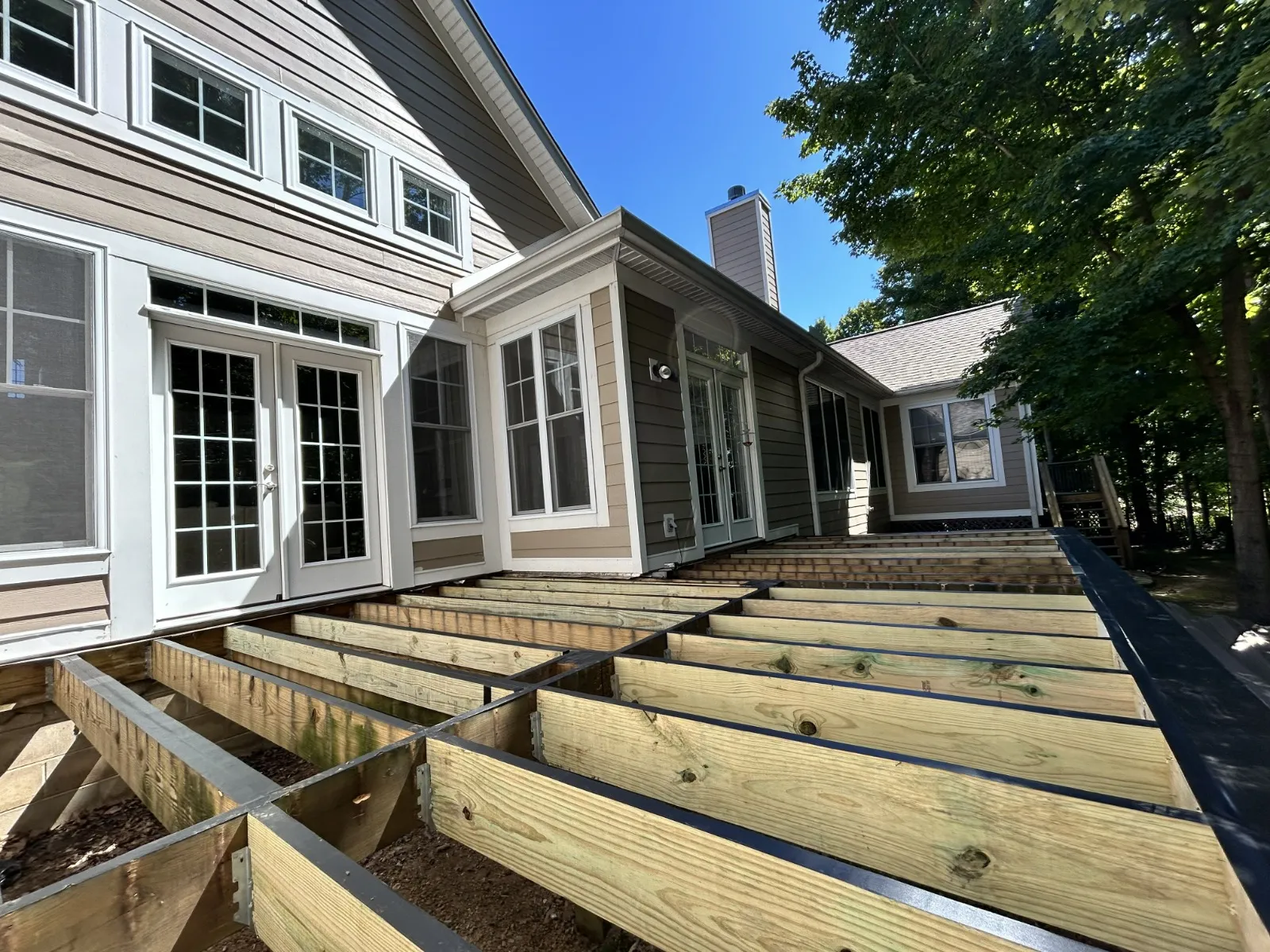
A deck can last for many years when it receives proper maintenance. However, over time, constant exposure to rain, sun, moisture, and temperature changes can affect its structure and safety. In many cases, problems start small, but if they are not addressed in time, they can turn into costly repairs or even safety risks for your family and guests.
If you have a deck at your home and are unsure about its condition, here are some important signs that may indicate whether it needs repairs or a complete replacement.
When a deck can be repaired:
Generally, a deck can be repaired when the damage is localized and the main structure is still in good condition. Some examples are:
- Cracked or worn deck boards.
- Loose stairs.
- Damaged railings.
- Some areas with rotten wood.
- Rusted screws or hardware.
- Minor moisture damage.
- Specific parts warped or deteriorated.
In these cases, it is normally possible to replace the affected parts, reinforce the connections, and update hardware and connectors. Remember that a repair is usually a good option when the main structure remains solid, the damage only affects certain areas, the repair cost is reasonable compared to a replacement, and finally if the deck still has several years of useful life.
Signs That a Deck Needs Replacement.
1. Widespread structural damage.
If multiple structural components show deterioration, the problem may be more serious than it appears. This includes damaged beams, rotten posts, weakened structure, and compromised connections. When the damage affects the main structure, replacement is normally the safest option.
2. Movement or instability.
A deck should never feel unsafe, so if you notice excessive movement, vibrations, instability, very loose railings, or weak stairs, it may be considered significant structural damage.
3. Extensive rot.
Rotten wood is one of the most common signs of advanced deterioration. If the damage is present in multiple areas, affects posts and structural components, continues spreading, and compromises safety, replacement may be more recommended than continuing repairs.
4. The deck is many years old.
Many older decks were built under different codes, have aged hardware, and over the years have accumulated moisture and wear. Although age does not automatically mean replacement, decks that are more than 15–20 years old usually require deeper evaluations.
5. Constant repairs.
When a deck requires frequent repairs, the accumulated cost can get close to the cost of a new deck. In those cases, a complete replacement may be a better long-term investment.
Get a Professional Deck Inspection
Before making a decision about your deck, remember to have a professional inspection performed. They will help determine whether the deck can be repaired, evaluate the damaged components, assess how advanced the deterioration is, determine how safe the deck still is, and most importantly, identify which option is more cost-effective in the long term.
Taking action early can help you avoid bigger problems and higher costs in the future. At RidgePoint Construction, we help homeowners in Bloomington and surrounding areas with deck inspections, repairs, and replacements, always focused on safety, communication, and clear solutions for every project.
-web_large.webp?image_version=1791004969)
-web_medium.webp?image_version=1791004971)
-web_medium.webp?image_version=1791004969)
Comments (0)
Sign in to leave a comment.